The trail's name Liiturin kiito refers to flying squirrels. Along the trail, there have been signs of this somewhat mystical animal that moves mainly in the dark. The easiest way to get an indication of the flying squirrel's habitat is to find yellow poo, about the size of a grain of rice, under the aspens. The habitat of flying squirrels is overgrown forests with large old aspens and birches.
Are you on the move on the spring? In spring, flying squirrels have nesting time and then they may chase each other around the tree during the day. Be careful, watch and listen, you might be lucky and see the "gray gloves" racing above you.
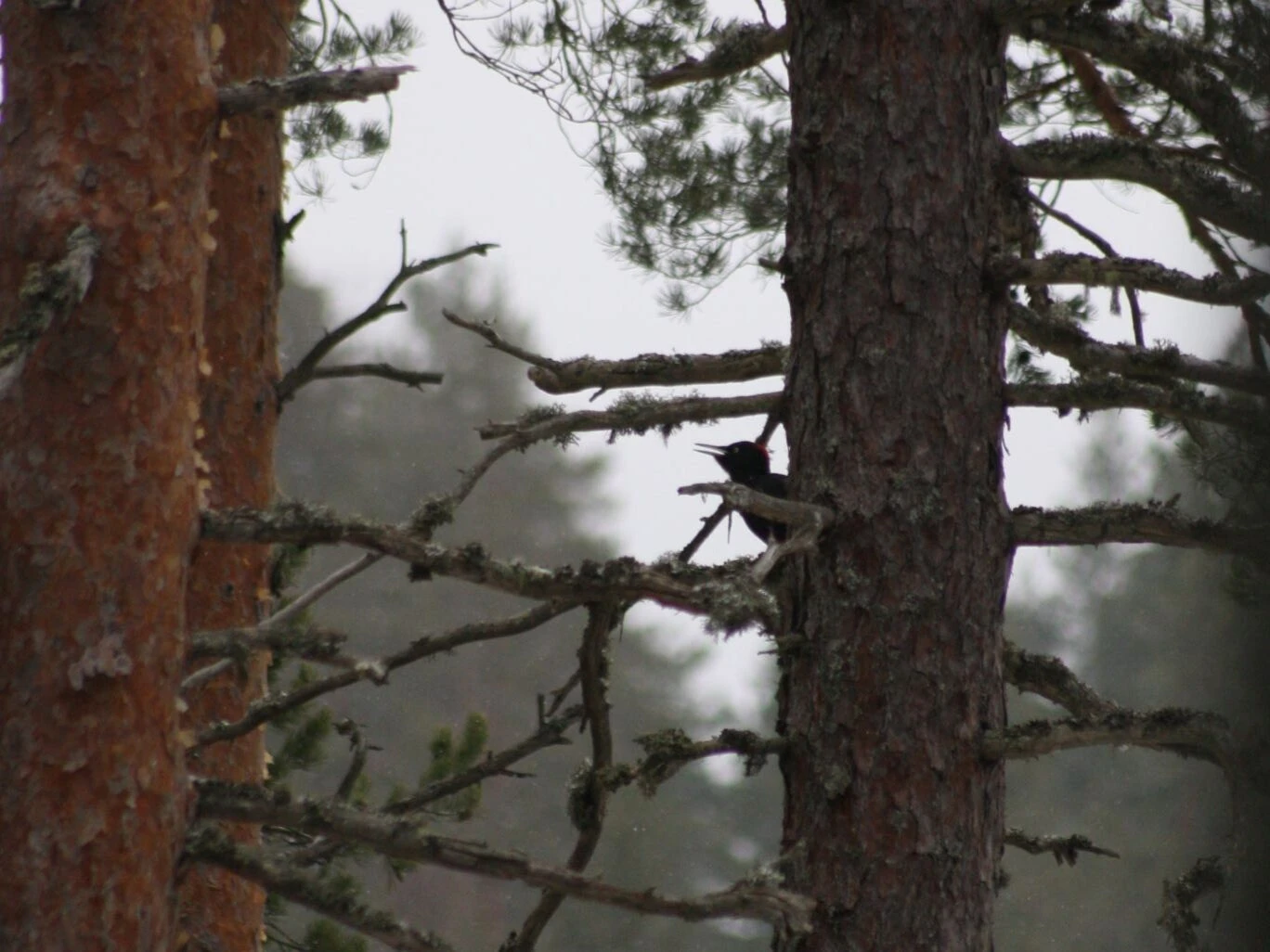
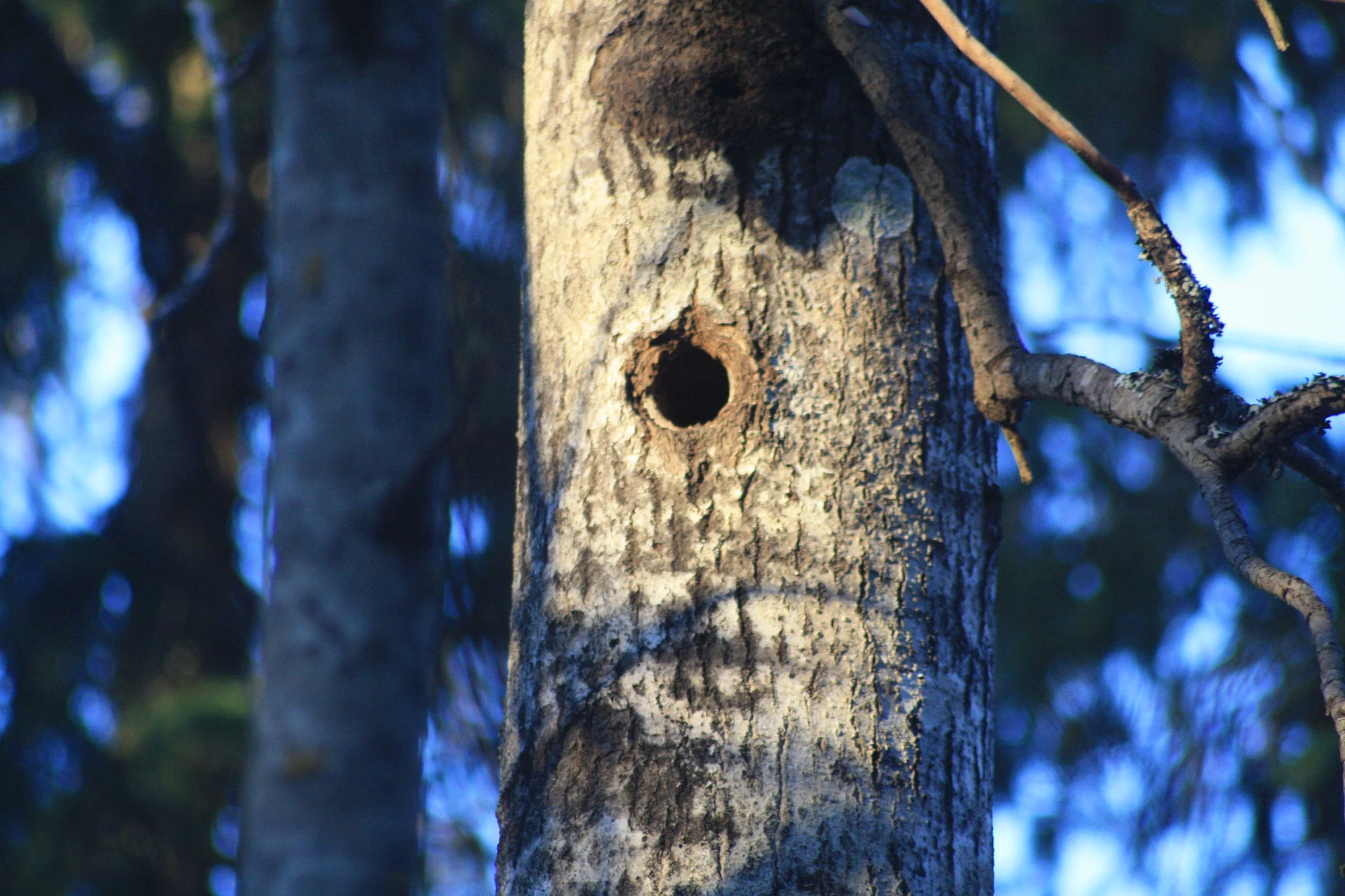
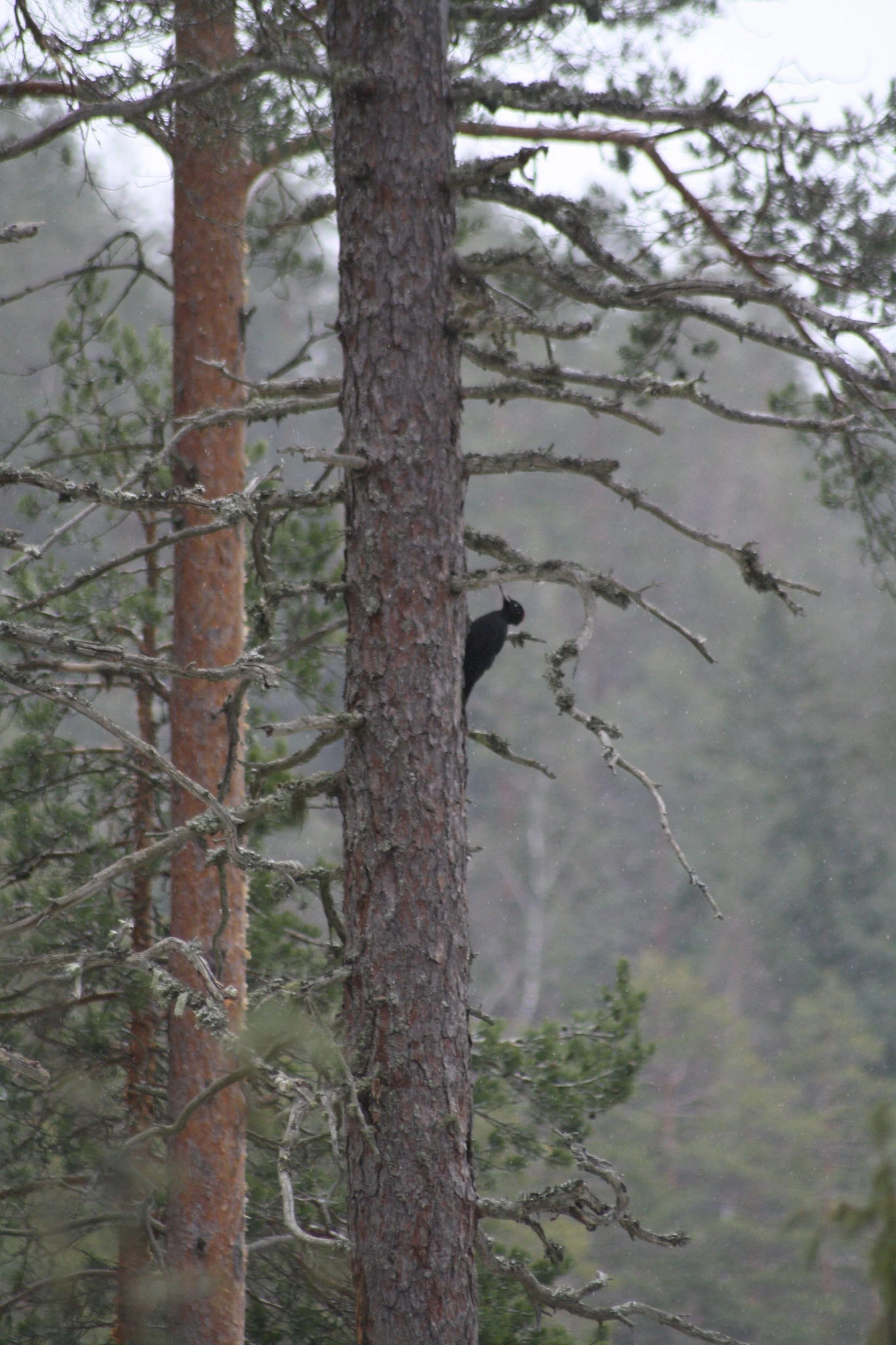
Black woodpecker (Dryocopus martius) as our largest woodpecker, drums powerfully in the spring with its drumming series, announcing its territory. The drumming can be heard far away and is quite loud when heard up close. The food of fireflies is e.g. ants and horse ants. Black woodpecker makes big holes in the trunks of the trees that have horse ants inside. There may be several large holes in one tree and some at the base, right on the surface of the ground.
Other animals, such as birds, also benefit from the holes of woodpeckers. Boreal owl (Aegolius funereus) uses old black woodpeckers nests as nesting sites because the black woodpecker is the only woodpecker that makes holes large enough for the boreal owl.